From Student to Scholar
Navigating the transition from student to scholar is perhaps the most challenging phase of your academic journey. Your dissertation is more than just a final requirement; it is a testament to years of rigorous research and a contribution to your field’s global conversation. However, the path from a complex data set to a polished, defense-ready manuscript is rarely a straight line. Between strict formatting guidelines, the nuances of academic tone, and the pressure of committee expectations, it’s easy for your core message to get lost in the margins. Our mission is to provide the expert editorial partnership you need to refine your voice, clarify your arguments, and ensure your hard work meets the highest standards of institutional excellence.


We offer a wide range of services designed to enhance research and writing skills and ensure that superior, top-quality work is produced to meet the highest academic standards. Don't let academic challenges hold you back from reaching your full potential. Let our expert staff provide essential services, support, and guidance
Our dissertation editing services include line-by-line editing, perfecting tables and figures, formatting for ProQuest submission, and other needs that may arise through the writing, editing, and revision stages. Please contact us to learn how we can help you through your academic journey. We work with students from all types of colleges and universities, including faith-based and public universities, liberal arts, private, state, and Ivy League universities.
Advisory Services


Choosing the right dissertation subject is crucial; we are here to help you select a topic that aligns with your research interests and academic goals. We will work closely with you to develop a research design that is rigorous and appropriate for your field of study, and assist you in identifying credible and relevant sources to strengthen the scholarly foundation of your work.
Our editors are experts in APA 7, MLA, Chicago, and AP. We focus on grammar, syntax, style, and tone, along with scrutinizing the text's internal coherence to identify any evident contradictions. We focus on language usage, style refinement, concision, and rhetorical strategies to ensure your ideas are communicated clearly.
Improved Quality & Clarity: Professional editors refine your writing style, eliminate jargon, improve logical flow, and ensure the academic tone is consistent, which makes the work more engaging and understandable.
Accuracy & Compliance: Editors correct grammatical, spelling, and punctuation mistakes, while ensuring compliance with specific formatting styles (e.g., APA, MLA, Chicago) and institutional guidelines.
Objectivity & Fresh Perspective: Editors provide an objective review that helps identify gaps in arguments or areas lacking development that you might miss after long-term engagement with the text.
Time & Stress Management: Utilizing professional services saves significant time, allowing you to manage other responsibilities and reduce the pressure associated with tight deadlines.
Enhanced Academic Standing: By strengthening the overall structure and presentation, editing increases the likelihood of a higher grade and successful approval, reducing chances of rejection.
Subject Expertise: Many editors have expertise in specific fields, offering guidance on terminology and ensuring that content is properly addressed.
Constructive Feedback: Editors can provide suggestions to improve the scholarly voice, structure, and coherence of the dissertation.
Overview of Style-guides
Some journals or other publishing venues use specific in-house styles. These are usually indicated as a set of rules on the journal's website or in a downloadable PDF — look for pages such as "Author Guidelines," "Instructions for Authors," "Submission Guidelines," etc. In some cases, in-house style will be just a few modifications to a more widely used style guide, such as requiring APA 7 edition while asking authors to list full names for sources cited in-text rather than just the last name. These are usually indicated in the same way as in-house styles.
American Phychological Association Citation Style
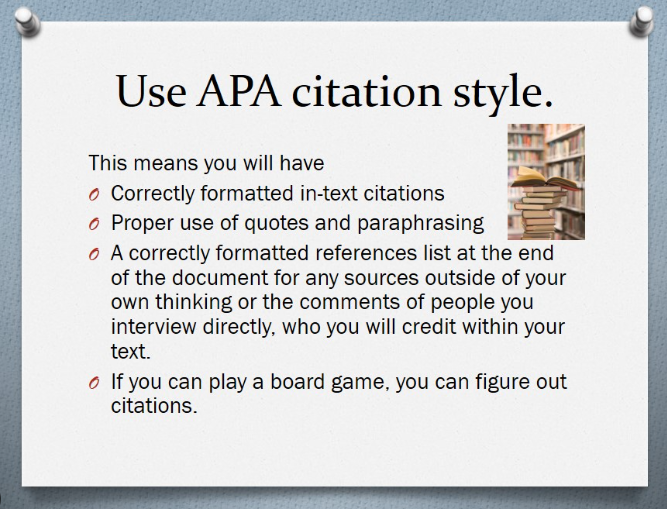
The American Psychological Association (APA) style is the primary formatting framework used in the social sciences, education, and nursing. Now in its 7th edition, APA style is designed to foster clarity, concision, and credibility. By utilizing a standardized "author-date" system, it allows researchers to credit the work of others seamlessly, ensuring that the reader’s focus remains on the original ideas and findings being presented.
APA style is the gold standard for clear, concise, and credible communication in the social sciences, education, and nursing. Currently in its 7th edition, APA style is more than a formatting requirement; it is a framework designed to move the reader’s focus from the mechanics of writing to the ideas themselves
The American Psychological Association (APA) style is currently in its 7th edition (released in 2020). It is the standard for social sciences, education, and nursing, emphasizing clear communication and the "author-date" citation system.
Paper Formatting Essentials: APA 7 distinguishes between student papers and professional papers (intended for publication).
Margins & Spacing: 1-inch margins on all sides; the entire paper must be double-spaced.
Font Options: Flexible, provided they are legible. Common choices include 12-point Times New Roman, 11-point Calibri, or 11-point Arial.
Headings: Use up to five levels of headings to organize your work. Level 1 is centered and bold; Level 2 is flush-left and bold.
Key Differences: Student vs. Professional In-Text Citations (Author-Date)
Every time you paraphrase or quote, you must include an in-text citation.
Parenthetical: (Smith, 2024)
Narrative: Smith (2024) argued that...
Direct Quotes: You must include a page number: (Smith, 2024, p. 15).
Three or More Authors: Use "et al." starting from the very first citation: (Taylor et al., 2020).
The Reference List
The Reference List starts on a new page titled References (bold and centered). Entries use a hanging indent (the first line is flush left, subsequent lines are indented 0.5 inches).
Common Reference Examples
Journal Article: Author, A. A. (Year). Title of article. Title of Periodical, Volume(Issue), pages. https://doi.org/xxxx
Book: Author, A. A. (Year). Title of work. Publisher. (Note: Publisher location is no longer required in APA 7).
Webpage: Author, A. A. (Year, Month Day). Title of page. Site Name. URL
Notable Changes in APA 7
Bias-Free Language: Use of the singular "they" as a generic third-person pronoun is now endorsed.
Publisher Location: Omitted for book citations.
In-Text Citations: "Et al." is used for 3+ authors immediately.
URLs/DOIs: "Retrieved from" is no longer needed before a URL unless a retrieval date is necessary for frequently changing content.
APA Format
APA format (7th edition) requires in-text citations with author- date (e.g., Smith, 2023) and a full "References" list at the end. Use "hanging indents" for references, arranged alphabetically. For digital sources, include DOIs or URLs. Citations for books, journals, names, dates, and websites require specific formatting for author names, dates, titles, and sources.
In-Text Citations (Author-Date System)
Basic Format: Parenthetical (Author, Year) or Narrative: Author (Year).
Direct Quotations: Add page number: (Smith, 2023, p. 15).
Two Authors: (Smith & Jones, 2023).
Three or More Authors: (Smith et al., 2023).
No Author: Use the title or organization name.
Reference List Format (End of Paper)
Basic Book: Author, A. A. (Year). Title of book. Publisher.
Journal Article: Author, A. A. (Year). Title of article. Journal Title, Volume(Issue), pages. DOI/URL.
Website: Author, A. A. (Year, Month, Day). Title of work. Website Name. URL.
Formatting: Double-spaced, 12pt font (e.g., Times New Roman), and 0.5-inch hanging indent for each entry.
Journal (Online): Ke, F., & Hoadley, C. (2009). Evaluating online learning communities. Educational Technology Research & Development, 57(4), 487-510. https://doi.org/10.1007/s11423-009-9120-2.
Book: Author, A. A. (2020). Title of book. Publisher.
As your professional editorial partners, we ensure your manuscript aligns with these rigorous technical requirements. From masterfully navigating hierarchical headings to perfecting the technical nuances of the reference list, we prepare your work to meet the highest institutional standards for approval and publication.

APA Conclusion
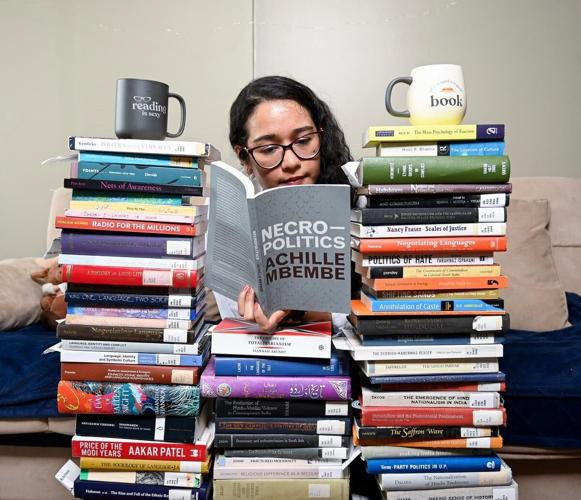
An APA 7 conclusion paragraph summarizes key arguments without introducing new evidence, restates the thesis in new words, and emphasizes the study’s significance. It should transition from specific findings back to broader implications, typically in one paragraph, offering a final "clincher" statement rather than just repeating the introduction.
Key Components of an APA 7 Conclusion
Restate the Thesis/Aim: Rephrase your main argument or purpose statement using different wording.
Synthesize Main Points: Briefly summarize the major arguments or findings from the body paragraphs.
Explain Significance: Discuss why your findings matter, their implications, or their applications.
Future Directions/Call to Action: Suggest areas for further research or, if applicable, practical steps to take.
Avoid New Information: Do not introduce new data, evidence, or citations that were not discussed in the paper's body.
Structure and Tips
Start Specific, End General: Move from your specific research findings to the broader, general context of the topic.
Length: A single, robust paragraph is typical, though some, such as San Jose State University, note it can occasionally be two or three paragraphs.
Avoid Cliches: Avoid starting with phrases like "In conclusion" or "To summarize," as they are unnecessary.
Tone: Maintain a clear, objective, and authoritative tone, according to tips from Purdue OWL.
Sentence 1: Restate your topic and its importance.
Sentences 2-4: Briefly synthesize the main points/findings.
Sentence 5: Highlight the importance of these findings.
Sentence 6: Conclude with a final, insightful sentence (a "clincher").
The effectiveness of any digital workspace or document relies on a harmonious balance between rigid structure and user-centric flexibility. By establishing a clear visual hierarchy—utilizing logical headings and organized layouts—you reduce cognitive load and allow for intuitive navigation. Furthermore, incorporating practical tips such as consistent formatting and prioritized content ensures that the page remains both professional and actionable. Ultimately, a well-structured page does more than present information; it guides the user toward a specific goal with clarity and ease.


From Submission to Success
We treat every student as an individual, making sure that the educational assistance we provide is much more than just exam results. For us, our values encompass everything we do. Our professional editing services ensure that your professional growth, and future careers will benefit from the years you spent working toward the highest pinnacle of your educational journey. We also provide any other revisions that the student may need before the final defense. As you approach the finish line, remember that the final polish of your manuscript is what transforms a draft into a legacy. You have already done the heavy lifting of conceptualizing, researching, and synthesizing your findings; now, let us help you cross the threshold with absolute confidence. By meticulously reviewing every citation, smoothing every transition, and ensuring your work adheres to every departmental standard, we remove the technical obstacles standing between you and your degree. Don't let minor errors or formatting hurdles overshadow your intellectual contribution. Partner with us today, and let’s turn your years of dedication into a definitive, professional achievement you are proud to defend.