Methodology outlines the "how" and "why" of your research, detailing your research design, data collection methods, and analysis techniques. It must explain the research philosophy (e.g., qualitative, quantitative, mixed-methods) and justify why these approaches are appropriate for answering research questions, allowing readers to evaluate the study’s validity and reliability.
Tips for Writing:
Be Descriptive: Provide enough detail for another researcher to replicate your study.
Use Past Tense: Generally, the methodology chapter is written in the past tense because it details research already completed.
Focus on Logic: Explain the reasoning behind your decisions rather than just listing procedures.
Key Components of the Methodology Chapter:
Research Approach: Outline the overall design (e.g., experimental, case study, survey, ethnography) and whether it is qualitative, quantitative, or mixed methods.
Data Collection Methods: Describe the tools and procedures used to gather data (e.g., interviews, surveys, experiments, archival research).
Sampling Strategy: Detail the population, sample size, sampling techniques (e.g., random sampling, convenience sampling), and inclusion/exclusion criteria.
Data Analysis Methods: Explain how the data was processed and analyzed (e.g., thematic analysis for qualitative; statistical tests for quantitative).
Justification: Explain why you chose these methods over alternatives and how they relate to the research objectives.
Ethical Considerations: Address informed consent, confidentiality, data storage, and approval from ethics boards.
Limitations: Acknowledge any constraints or potential flaws in the chosen methods.


Structure, Rigor, & Scholarly Contribution
Quantitative Methods: The Power of Precision
The Focus: Identifying broad patterns, correlations, and causal relationships through numerical data.
The Rigor: Utilizing statistical modeling, structured surveys, and longitudinal studies to ensure empirical validity.
Our Strategic Review: I focus on the internal consistency of your data presentation. Whether you are using SPSS, R, or Stata, I ensure your Quantitative Results are reported with the mathematical and terminological precision required for APA 7th Edition compliance.
Qualitative Methods: The Depth of Experience
The Focus: Capturing the "lived experience" and subjective meanings within a specific social context.
The Rigor: Employing ethnography, phenomenological case studies, and grounded theory to uncover nuanced human narratives.
Our Strategic Review: Qualitative research lives and dies by its "trustworthiness" and "audit trails." I help you refine your Interpretive Frameworks, ensuring your coding processes and thematic analyses are articulated with absolute clarity and academic depth.
Qualitative research explores ideas, experiences, and meanings through non-numerical data (words, images, observations) to understand "why" or "how". Quantitative research tests theories by measuring variables using numbers, statistics, and graphs to identify patterns or "how many". Both are often combined to provide a comprehensive analysis.
Key Differences
Data Type: Qualitative uses text, audio, video, or photos. Quantitative uses numbers, percentages, and metrics.
Objective: Qualitative seeks to understand concepts, thoughts, or experiences. Quantitative seeks to test hypotheses, look at cause and effect, and make predictions.
Methodology: Qualitative often involves open-ended questions, interviews, focus groups, and case studies. Quantitative utilizes surveys with closed-ended questions, experiments, and analysis of existing datasets.
Sample Size: Qualitative research typically uses smaller, targeted samples. Quantitative research usually requires larger, representative samples to generalize findings.
Analysis: Qualitative analysis involves coding, thematic analysis, and interpretation. Quantitative analysis uses statistical software and mathematical calculations.
Examples
Qualitative: "What are the emotions behind this purchase?" or analyzing interview transcripts to understand user frustration.
Quantitative: "What percentage of customers bought this item?" or calculating the average response time for a customer service team.
When to Use Which?
Qualitative is ideal for exploratory studies, gathering deep insights, or understanding the context behind behaviors.
Quantitative is best for confirming theories, measuring trends, and making decisions based on statistical evidence.
Mixed Methods: Combining both allows researchers to use qualitative data for in-depth insights and quantitative data to validate those findings across a larger population.
Research Variables
The cornerstone of any empirical investigation lies in the precise identification and categorization of variables. Whether a study seeks to measure frequency and magnitude or to explore the nuances of human perception, the distinction between Qualitative and Quantitative variables dictates the entire trajectory of the research design. Quantitative variables provide the numerical backbone necessary for statistical inference and hypothesis testing, while qualitative variables offer the categorical framework required to understand diversity in type and attribute. Mastering this distinction is not merely an exercise in labeling; it is the essential first step in ensuring that your data collection tools are aligned with your overarching research objectives.




Strategic Review
A strategic review of a dissertation evaluates its structure, methodological rigor, and scholarly contribution, focusing methodological rigor, and scholarly contribution, focusing on alignment between the research question, literature, and findings. It transforms a summary into an analytical argument by identifying research gaps, synthesizing sources, and justifying the study's approach, ensuring a logical flow from introduction to conclusion. Steps for Effective Review Strategy:
Map Out Early: Create a detailed outline and Table of Contents to manage the workflow and timeline.
Use the 5 C’s: Cite, Compare, Contrast, Critique, and Connect.
Evaluate Methodologies: Assess the strength of previous research designs rather than just accepting findings.
Refine Arguments: In later drafts, emphasize findings over the process and improve clarity by reducing jargon.
Utilize Tools: Employ citation managers and, where allowed, AI tools to assist in literature discovery and organization.
Key Components of a Strategic Review:
Align Content with Purpose: Every paragraph must connect back to the primary research question and justify the study’s significance.
Synthesize, Don't Summarize: Focus on comparing, contrasting, and connecting literature rather than just reporting studies.
Identify Research Gaps: Highlight what is missing in current research to justify your study.
Use a Structured Approach: Utilize a literature synthesis matrix or create thematic "reference piles" to organize literature efficiently.
Refine the Structure: Use a thematic or chronological approach to guide the reader through the evidence.
Steps for Effective Review Strategy:
Map Out Early: Create a detailed outline and Table of Contents to manage the workflow and timeline.
Use the 5 C’s: Cite, Compare, Contrast, Critique, and Connect.
Evaluate Methodologies: Assess the strength of previous research designs rather than just accepting findings.
Refine Arguments: In later drafts, emphasize findings over the process and improve clarity by reducing jargon.
Utilize Tools: Employ citation managers and, where allowed, AI tools to assist in literature discovery and organization.


Editing for APA Consistency
APA 7th Edition (or your specific university style) is often the biggest hurdle to committee approval. Detailed APA 7th Edition compliance audit and academic citation checking for graduate students.
Citation Audit: Cross-referencing every in-text citation with your reference list to ensure 100% accuracy.
Mechanical Formatting: Meticulous attention to margins, running heads, level headings, and pagination.
Table & Figure Precision: Transforming raw data into APA-compliant tables and figures that are ready for publication.
Strategic methodology review and structural alignment for PhD research and scholarly writing. APA/Compliance: Detailed APA 7th Edition compliance audit and academic citation checking for graduate students.
The Foundation of Scholarly Integrity
"The strength of any dissertation lies in the integrity of its methodology. It is the framework that transforms raw observation into validated knowledge, ensuring your findings are both credible and replicable. Navigating the complexities of research design—from choosing the right interpretive lens to ensuring APA 7th Edition alignment—requires a meticulous eye for detail. My methodology services are designed to provide that expert second perspective, refining your technical approach to ensure your research stands up to the most rigorous committee scrutiny."
Mixed Methods: The Holistic View
The Focus: Integrating the "what" (data) with the "why" (narrative) to provide a comprehensive look at complex social phenomena.
The Rigor: Triangulating data sources to validate findings and provide a multi-dimensional perspective.
Our Strategic Review: The challenge of mixed methods is integration. I ensure your Quantitative and Qualitative findings speak to one another seamlessly, creating a unified and persuasive argument.


Methodology Reviews: The Structural Backbone
Alignment Check: Ensuring your research questions, methodology, and results are perfectly aligned.
Methodological Transparency: Reviewing your procedures for replicability and detail—the two things committees look for most.
Gap Identification: Highlighting any areas where your argument might need further evidence or a stronger theoretical link.
Methodology Review
A methodology review is the structural "stress test" of a research project. It ensures that the way you plan to collect and analyze data is logically sound, ethical, and capable of answering your specific research questions.
Unlike a general edit, a methodology review focuses on the alignment and transparency of your research design.
The Alignment Audit
The core of the process is checking for "internal consistency." A reviewer looks at the golden thread connecting three main areas:
Research Questions: Are they clear and answerable?
Methodological Choice: Does the choice (Qualitative, Quantitative, or Mixed Methods) actually fit the questions? (e.g., using a survey to explore deep emotional lived experiences might be flagged as a mismatch).
Instrumentation: Do the interview protocols or survey scales actually measure the variables you've identified?
Procedural Transparency
A successful methodology must be replicable. The review process evaluates whether a stranger could read your "Chapter 3" and conduct the same study. This includes:
Participant Selection: Clearly defining inclusion and exclusion criteria (who is in the study and why).
Data Collection Steps: A step-by-step "recipe" of what happens from the moment a participant is recruited to the moment the data is saved.
Data Analysis Plan: Explicitly stating which coding methods (for qualitative) or statistical tests (for quantitative) will be used.
Rigor and Trustworthiness
The reviewer assesses the "strength" of your findings based on standard academic benchmarks:
Quantitative: Checking for validity (accuracy) and reliability (consistency).
Qualitative: Checking for credibility, transferability, dependability, and confirmability. This often involves looking for "triangulation"—using multiple data sources to support a conclusion.
Ethical Integrity
Every review includes a check for human subject protections. This ensures that:
Informed consent processes are robust.
Data storage is secure and confidential.
Potential risks to participants have been mitigated.
Comparison: Basic Editing vs. Strategic Methodology Review
Basic Proofreading, Strategic Methodology Review, Focus on grammar, spelling, and punctuation.Logic, alignment, and research design.
Goal Readability, defense-readiness, and scholarly rigor. Outcome: A clean manuscript, methodologically "bulletproof" argument, and APA Scope: Basic citations.Complex table formatting and methodological standards.
In the final stages of a Ph.D., a methodology review is often the difference between "Revisions Required" and "Approved." It moves the work beyond a student project into a professional contribution to the field by ensuring the structural backbone of the research is unbreakable.
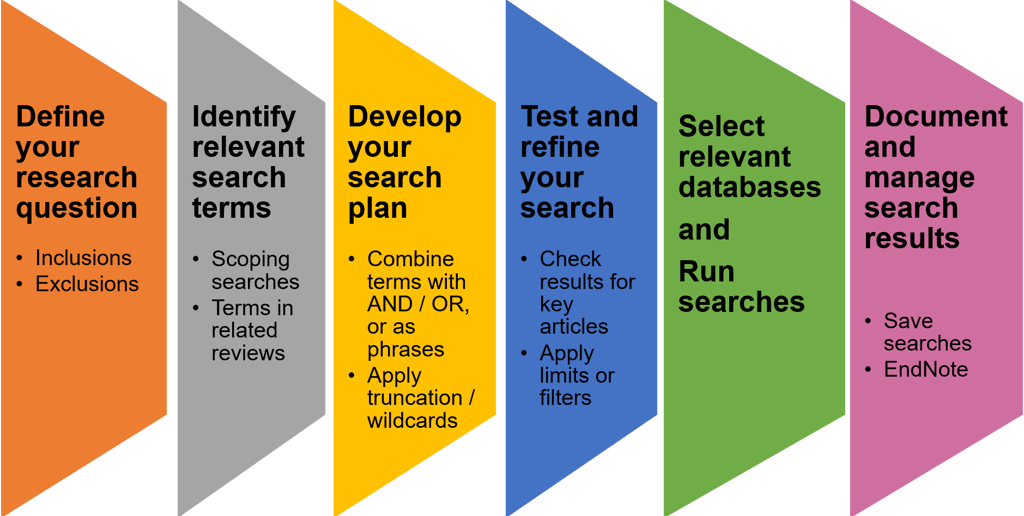
Refine Your Methodolgy
Methodology and APA Compliance
While I ensure your document is error-free, my approach is much more personalized. I focus on your specific methodology and APA compliance, ensuring your unique academic voice remains the priority throughout the process.
"Can you help with specific chapters, or do I need to submit the whole project?"
I offer flexible, tiered pricing, including chapter-by-chapter support. Whether you need a final polish on your entire dissertation or a deep dive into your Methodology chapter, we can work at your pace.
"Does your service comply with university ethical guidelines?"
Absolutely! My role is to provide instructional guidance, formatting expertise, and clarity. I do not write content for students; instead, I empower you to produce your best possible work within your institution's standards.
"What is the turnaround time for a review?"
Timelines vary based on the depth of the review, but I prioritize clear communication so you can stay on track with your university's defense and submission deadlines.
Ready to Refine Your Methodology?
If you've received your mentor's feedback and are ready to transform those markups into a submission-ready chapter, let's get started.
Refining a methodology involves an iterative, critical review to improve accuracy, efficiency, and validity. Key steps include narrowing the focus using the 5W's (Who, What, When, Where, Why), defining precise PICOTS elements (Population, Intervention, Comparator, Outcome, Timing, Setting), and applying consistent feedback loops to eliminate inefficiencies and strengthen evidence.
Core Strategies for Methodology Refinement
Implement Iterative Cycles: Treat your methodology as a dynamic draft, not a finished product. Conduct pilot tests, analyze outcomes, and apply improvements over several rounds.
Define Clear Parameters (PICOTS): Ensure your study's scope is precise by defining the Population, Intervention, Comparator, Outcome, Timing, and Setting.
Analyze and Review: Critically assess the existing data, looking for errors, biases, or inefficiencies. Use techniques like the 5W's to ensure all facets are covered.
Enhance Efficiency (INVEST Criteria): Ensure tasks are refined to be Independent, Negotiable, Valuable, Estimable, Small, and Testable.
Focus on Validity and Reliability: Rephrase questions and modify instruments to ensure they capture the intended data accurately and reduce participant attrition in studies.
Steps to Refine Your Process
Draft: Outline the preliminary method or research question.
Evaluate: Identify bottlenecks, bias, or areas lacking clarity.
Adjust: Apply specific, small changes to improve accuracy.
Repeat: Continuously refine until the method is robust.
When updating your approach, it is helpful to look for data inconsistencies and apply expert critiques to refine the focus, ensuring the methodology is as effective as possible




Conclusion
Ultimately, the strength of a dissertation’s methodology depends on how effectively these variables are operationalized to answer the core research questions. While Quantitative Results offer the breadth and generalizability required for scholarly rigor, Qualitative insights provide the depth and context that bring those numbers to life. By maintaining a clear "audit trail" and ensuring that every variable is defined with APA 7th Edition precision, you transform a simple data set into a robust, defensible argument. This synergy between measurement and meaning is what elevates a standard manuscript to the level of professional, submission-ready scholarship.